


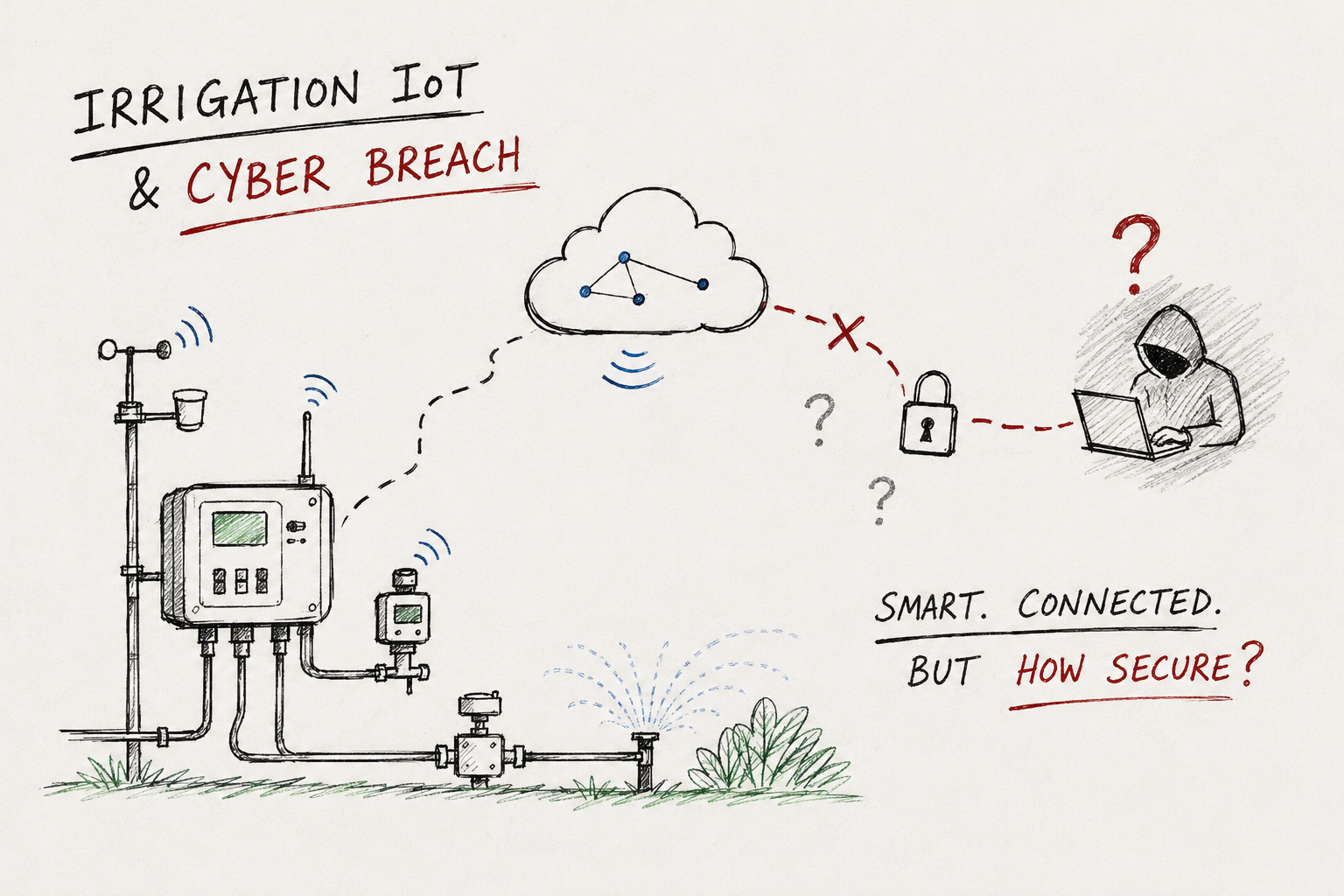
Irrigation IoT & Cybersecurity — Protecting the IT–OT Boundary
Modern irrigation is increasingly a cyber-physical system. Cloud-connected controllers, SCADA/BMS interfaces, pump PLCs, weather stations, flow meters, soil-moisture sensors and 4G/5G gateways can exchange operational data through protocols such as Modbus TCP, BACnet/IP, MQTT and vendor APIs.
This connectivity improves water efficiency, diagnostics and remote operation—but it also expands the cyber attack surface.
The critical point is the IT–OT boundary. A compromised cloud account, cellular router, poorly secured API or engineering laptop could provide an unintended pathway into the Operational Technology (OT) network. The impact may extend beyond data loss: unauthorized valve commands, altered irrigation schedules, disabled alarms, manipulated flow readings or abnormal pump operation can create real hydraulic and operational consequences.
Security therefore needs to be embedded within the irrigation control architecture.
Good practice starts with IT/OT network segmentation, industrial firewalls, secure VPN access, role-based permissions and multi-factor authentication. Controllers and gateways should use authenticated devices, encrypted communication where supported, controlled firmware updates and centralized event logging. Remote vendor access should be temporary, traceable and restricted to defined assets.
Protocols such as Modbus should never be considered secure merely because they operate inside an irrigation network.
Most importantly, loss of cloud or WAN connectivity should not mean loss of irrigation control. Local controllers, PLC interlocks and hydraulic protection must remain independently functional and fail-safe.
The future is not simply connected irrigation.
It is cyber-resilient irrigation—where IoT intelligence, OT security and hydraulic resilience are engineered as one system.
